As the global energy field shifts toward efficiency, decarbonization, and net-zero targets, organisations are rethinking how electricity, heating, and cooling are produced. One technology that continues to gain attention during this transition is Combined Heat and Power (CHP).
While fully carbon-neutral heating solutions are still evolving at scale, CHP offers a useful and proven way to reduce energy waste today. By generating electricity and useful thermal energy at the same time, CHP systems greatly improve overall efficiency and play a key role in modern energy strategies.
At CHP System, we help businesses and institutions implement CHP solutions that deliver reliable performance, lower emissions, and long-term value.
What Is CHP (Combined Heat and Power)?
Combined Heat and Power, often referred to as cogeneration, is an integrated energy system that produces electricity and captures the heat generated during that process for useful applications. Unlike conventional power plants that discard large amounts of heat, CHP systems recover and reuse this energy for heating, hot water, industrial processes, or even cooling through absorption chillers.
This simultaneous production of power and heat is what allows CHP systems to reach much higher efficiency levels compared to traditional generation methods.
How Does a CHP System Work?
A CHP system operates by producing electricity on-site while recovering thermal energy that would otherwise be wasted. These systems are typically installed within facilities or connected to district energy networks, allowing energy to be used close to where it is generated.
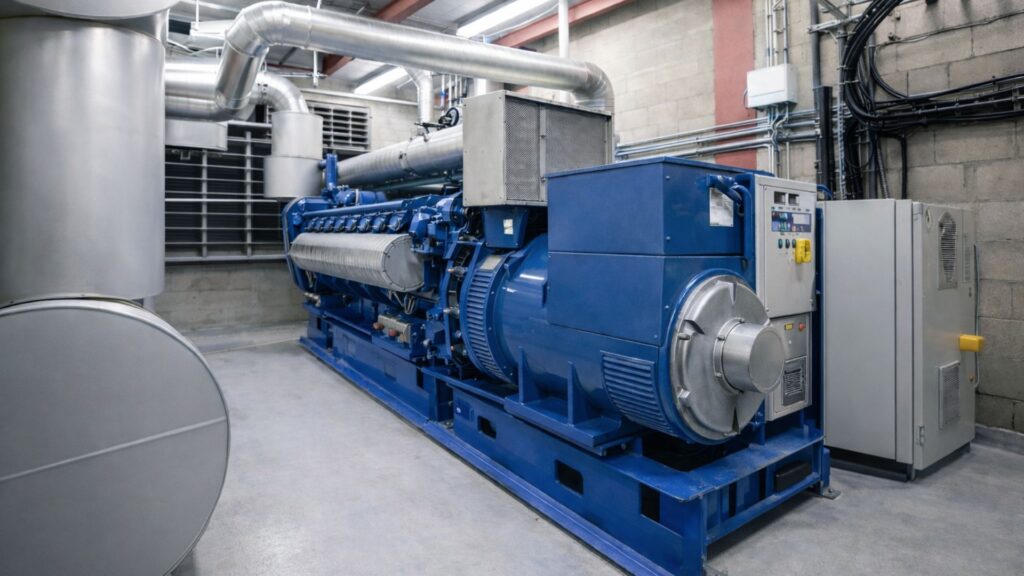
One common configuration uses a combustion engine or gas turbine to generate electricity. The hot exhaust gases then pass through a heat recovery unit, where thermal energy is captured and converted into hot water or steam. This configuration is widely used in industrial facilities, hospitals, campuses, and district heating systems due to its operational flexibility.
Another configuration relies on a steam boiler and a steam turbine. In this setup, high-pressure steam is produced in a boiler and used to drive a turbine for electricity generation. The remaining thermal energy is then recovered from the exhaust steam. This approach is particularly effective in industries with continuous steam demand, such as chemical processing or food manufacturing.
The Main Benefits of CHP Systems
CHP systems provide a combination of economic, operational, and environmental advantages when applied in the right context.
Higher overall efficiency
CHP systems can achieve total efficiencies above 80%, far exceeding those of conventional power plants.
Improved resilience and energy security
On-site power generation allows facilities to maintain operations during grid outages, which is necessary for hospitals, data centres, and industrial sites.
Lower environmental impact
Using fuel more effectively, CHP reduces carbon emissions and overall fuel consumption.
Support for renewable energy integration
CHP complements wind and solar by providing stable, dispatchable power and heat.
Where CHP Is Commonly Used
CHP is most effective in facilities with consistent and simultaneous demand for heat and electricity. Typical applications include:
- Industrial manufacturing plants
- Hospitals and healthcare facilities
- Universities and large campuses
- District heating and cooling networks
- Commercial and institutional buildings
- Airports and transport hubs
These environments benefit from high operating hours, which improve system economics and efficiency.
Combining CHP with Large-Scale Heat Pumps
Modern energy systems increasingly combine CHP with large-scale heat pumps to further enhance performance and reduce emissions. Waste heat from CHP systems, often available at relatively low temperatures, can be captured and upgraded using heat pumps.
By adding a small amount of electrical energy, heat pumps raise the temperature of recovered heat to levels suitable for district heating or industrial use. This hybrid configuration greatly improves overall system efficiency and aligns more closely with long-term decarbonization goals.
Is CHP Always the Best Energy Solution?
Although CHP is a highly effective technology, it is not always the optimal choice in every scenario. In systems designed for very low-temperature operation, or in projects aiming for the complete elimination of fossil fuels, alternative solutions such as industrial heat pumps, thermal energy storage, or fully renewable district heating may be more suitable.
The suitability of CHP depends on multiple factors, including fuel availability, heat demand levels, operating hours, grid interaction, and long-term sustainability objectives. A detailed technical assessment is essential before selecting the technology.
Choosing the Right CHP System for Your Project
Selecting the correct CHP system requires more than choosing equipment; it requires understanding how the system fits into the broader energy strategy. Thermal and electrical demand profiles, integration with existing infrastructure, regulatory requirements, and future expansion plans all play a role.
At CHP System, every project is evaluated as a complete energy system. Our engineering approach ensures that CHP solutions are optimised for efficiency, reliability, and future flexibility, whether operating as a standalone system or as part of a hybrid energy network.
Why Choose CHP System?
At CHP System, we combine technical expertise with helpful experience to deliver CHP solutions that perform in real-world conditions. Our team focuses on system-level optimisation rather than isolated components, ensuring long-term operational success.
We support our clients from early-stage feasibility analysis through design, supply, installation, and commissioning. Every solution is suited to project-specific requirements, regulatory frameworks, and sustainability targets.
Book a CHP Service Consultation Today
If you are considering CHP for your facility, campus, or district energy project, now is the ideal time to explore your options. A properly designed CHP system can reduce energy costs, improve resilience, and support your decarbonization roadmap.
Contact CHP System today to schedule a professional consultation and discover how a customised CHP solution can work for your project.